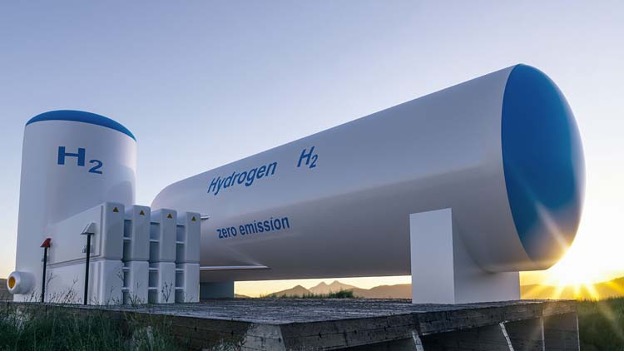
The Alliance supports forms of energy development other than natural gas, including hydrogen. Hence this feature, first published by Resource Works:
Development in Canada of hydrogen as a “clean” fuel and resource has been slower
than generally hoped for — but Alberta is trying to set a pioneering pace.
“Hydrogen represents a significant economic opportunity for Alberta’s energy sector and
the province,” says that province’s government.
“By 2050, it is expected that the world’s hydrogen economy will be worth trillions.
Alberta is well positioned to be a key part of the global hydrogen economy. . . .
“By 2030, it is anticipated that the hydrogen economy in Alberta could bring tens of
thousands of jobs and billions of dollars of economic activity during the construction
phase, as well as thousands of jobs and hundreds of millions of dollars of economic
activity during the project operations phase.”
Hydrogen has long been held out as a climate solution because it does not emit carbon
dioxide when burned. The major byproduct of combusting hydrogen is simply water vapour.
Ammonia in plans
Related, and prominent on Alberta’s planning table, is ammonia. Not the bottled and
weak solution used in the home for heavy-duty cleaning and degreasing, but tonnes of
chilled industrial liquid ammonia that could be exported to Asia as a source of . . .
hydrogen.
The Japanese government estimates demand for ammonia will reach three million
tonnes in 2030 and boom to 30 million tonnes in 2050.
Hydrogen makes up 17.65% of the mass of ammonia. The ammonia then is “cracked”
to release the hydrogen, which then can be used as a fuel. Hydrogen can be burned
directly in an internal combustion engine with no carbon emission, converted to
electricity directly in a fuel cell, or provide hydrogen for other engines.
And the federal Invest Canada agency says: “Projections indicate that ammonia will be
the most used zero-emission fuel in the maritime industry by 2050. Ammonia also has
the potential to be used to decarbonize rail, heavy road transport and aviation.”
As the U.S. Department of Energy notes: “Transportation and distribution (of ammonia)
would be simpler and cheaper than hydrogen delivery; and final use in an internal
combustion engine or fuel cell would produce no carbon dioxide.”
Efficient carrier
Liquid ammonia is a more efficient “carrier” for hydrogen than liquid hydrogen itself
because it can be stored at -33°C, whereas liquid hydrogen requires -253°C.
Back to hydrogen: Alberta has been producing hydrogen for 50-plus years, and
produces the majority of Canada’s hydrogen.
And on its books is its 2021 Hydrogen Roadmap: “With our enormous natural gas
reserves, land well-suited to storing carbon emissions, and a rapidly growing renewable
energy sector, we have the assets needed to make clean hydrogen at a low cost. . . .
“With a growing global market – estimated by the Hydrogen Council to be worth $2.5
trillion a year by 2050 – hydrogen has the potential to be the next big chapter in
Alberta’s energy story.”
The federal government also has a hydrogen strategy on the books. And Ottawa sees
the domestic market alone generating revenue of up to $50 billion per year by 2050.
Dale Nally, Alberta’s former associate minister for natural gas and electricity, said while
in office that companies in Japan and the world are looking to Alberta: "They see us as
a key provider of their affordable clean hydrogen."
Alberta’s hydrogen now is used mainly as compressed gas over land for oil and gas
refining, chemicals, and fertilizer production.
Colours of hydrogen
Hydrogen produced by differing methods is known by colours, from green (produced by
breaking down water with renewable power) and blue (produced from natural gas with
carbon-capture involved) to purple and pink (from using nuclear power) and on to grey
(produced from natural gas without capturing the resulting carbon dioxide) and to white
(a byproduct of industrial processes or even naturally-occurring hydrogen).
Such natural “white” hydrogen has been found in Saskatchewan, by Canada’s first
natural hydrogen well, drilled by MAX Power in late 2025. It plans a second well “to
validate commerciality.”
Alberta’s main production now is “blue” hydrogen, tapping the province’s enormous
natural gas reserves and existing carbon capture, utilization, and storage infrastructure.
But Alberta also produces grey hydrogen, and is increasing its capacity for green
hydrogen.
Ammonia production is also categorized by colours, from brown ammonia (derived from
coal, as in China) to grey (produced from methane-derived hydrogen), turquoise and
blue (both with carbon capture) and green ammonia (emitting virtually no carbon dioxide
during production.)
Blue for export
It’s blue ammonia that Alberta wants to export to Asia. “Ammonia is seen as a key,
immediate opportunity to move hydrogen to overseas markets where it can be used
directly for power generation.”
Ammonia produced in Alberta would be moved in special high-pressure tank cars to the
West Coast.
The Ridley Island Energy Export Facility project at Prince Rupert is already designed to
handle ammonia, as well as natural-gas liquids such as propane and butane. And
Trigon Pacific Terminals is building a new berth at Prince Rupert that will handle clean
fuels such as ammonia.
On arrival at a port, the ammonia is transferred from the rail cars into storage tanks and
then loaded onto specialized ships to head for overseas buyers.
Alberta also sees potential exports of ammonia to Europe, via the port of Churchill,
Manitoba.
Millions of tonnes
Alberta now produces around 3.5 million tonnes of ammonia per year, the vast majority
of Canada’s total production.
And new projects in the works are aiming to produce another three million tonnes in
total:
• Marubeni Corp., a major Asian commodity trader, is working with Pembina
Pipeline Corp. of Calgary to develop a low-carbon hydrogen and ammonia
production facility near Fort Saskatchewan, north of Edmonton.
• ATCO EnPower and partners also propose an ammonia plant near Edmonton,
saying: “Global demand for low-carbon ammonia is rapidly increasing, notably in
Japan and South Korea, where carbon reduction targets and limited domestic
energy resources are driving demand for imported lower carbon energy.”
• Hydrogen Canada Corporation has a memorandum of understanding (MOU) with
Korea Southern Power “to jointly develop a clean ammonia production and
export business in Canada”. It proposes to produce one million tonnes a year of
ammonia in Alberta.
And the Canada Energy Regulator says ammonia projects are also planned in
Newfoundland and Labrador, and Nova Scotia.
“Added together, projects proposed across Atlantic Canada envision over six million
tonnes of low-carbon ammonia per year, principally for export to global markets.”
This feature as published by Resource Works: https://bit.ly/4t46FcS