Hats off to FortisBC’s planned Phase 2 expansion of its Tilbury LNG plant in Delta for firmly including a role for, and benefits for, the xʷməθkʷəy̓əm (Musqueam) Indian Band.
FortisBC’s commitments to First Nations began with its Statement of Indigenous Principles, developed in 2001 with guidance and input from Indigenous leaders across BC.
The company hit headlines in 2012 when it developed an equity partnership with the Stz’uminus (Chemainus) First Nation and Cowichan Tribes for FortisBC’s Mount Hayes LNG facility on Vancouver Island, which produces 60,000 tonnes of LNG a year for domestic use.
Each nation invested $5.7 million at Mount Hayes, creating jobs and economic opportunities in their communities. And FortisBC says: “As a result, the region received $70 million in investment, which included sourcing local suppliers for goods and services, direct local employment during construction and 12 full-time operations jobs at the facility.”
Fortis later became, as well, a PAIR Gold company with the Canadian Council for Indigenous Business.
Now FortisBC is working toward the latest round (Phase 2) of expansion at Tilbury and says: “We are proud to partner with the Musqueam Indian Band on this project that will benefit the region for decades to come.”
And the B.C. government said: “The expansion also represents an opportunity to . . . advance economic reconciliation through First Nations ownership opportunities.”
FortisBC says it includes options for Musqueam to acquire equity ownership in the projects at Tilbury.
Chief Wayne Sparrow adds: “This project reflects the importance of First Nations being owners, not just participants, in major developments on our territories.
“We welcome the province’s support for advancing economic reconciliation through equity ownership and look forward to working alongside FortisBC, while continuing to engage with our community, to deliver long-term benefits for our people and the region.”
(Ottawa’s Environmental Assessment Office, in giving its OK for the expansion, says it sought consensus with 12 Indigenous Nations, and 13 other Indigenous groups were informed of key milestones. Federal approval came with 18 legally binding conditions that include ongoing monitoring of impacts to First Nations.)
Users of the LNG from an expanded Tilbury LNG will include LNG-powered B.C. ferries, and freighters and cruise ships visiting the Port of Vancouver. Demand has been increasing, and Seaspan Energy operates LNG bunkering (fuelling) vessels and also handles ship-to-ship fuel transfers.
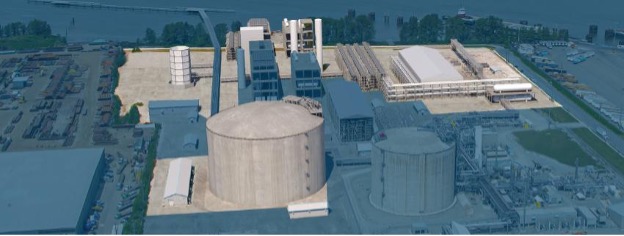
The new expansion project will add a new storage tank and equipment to produce up to 7,700 tonnes of LNG per day. Construction is expected to begin in mid-2027, and the increased LNG production would start in 2031.
Also expected in early 2027 is a start on building FortisBC’s Tilbury Marine Jetty and marine loading platform, on the south arm of the Fraser River near the Tilbury LNG facility.
The jetty project will fuel LNG-powered ships and includes an LNG pipeline from the FortisBC facility.
And Fortis notes that its jetty project team “engaged with over 30 Indigenous communities through working sessions, individual meetings and two-way exchanges of information, resulting in consent and support letters from 12 different nations.”
Some of the gas from the Tilbury expansion can also be added to FortisBC’s domestic services as needed, and some of the LNG could be exported.
Federal approval of the next round of expansion came under Ottawa’s new “one project, one review” approach, immediately after the B.C. government issued an environmental assessment certificate.
B.C. says the expansion project could generate 6,200 years of employment during construction, and then 100 permanent jobs. And it would contribute up to $1.7 billion to B.C.’s GDP during construction.
B.C. has touted the expansion as helping meet rising demand for LNG at the Port of Vancouver and improving access to fuel for vessels that travel the coast and across the Pacific.
Federal Environment Minister Julie Dabrusin says the project shows how to “create jobs and grow the economy while protecting the environment and advancing reconciliation.”
And federal Energy Minister Tim Hodgson called the approval “a step forward in our mission to get major nation-building projects built faster.”
- Fortis BC is also an affiliate partner of our Alliance: https://bit.ly/4egxcjj(Posted here 29 October 2026)
