
Prime Minister Mark Carney, in China to sign a trade agreement on Nov. 17, underlined a goal of Canada quadrupling LNG exports to Asia by 2030.
“Two years ago, we’d never shipped a major LNG cargo to Asia. Since Canada’s first shipment last June, we’ve now shipped more than 11 million tonnes. We will quadruple this by the end of the decade and then double it again in the next one.”
If that were definitive, it looks as if he’s targeting some 44 million tonnes by 2030. But in January this year he said: “By 2030, Canada will produce 50 million tonnes of LNG each year, all of which will be destined for Asian markets.”
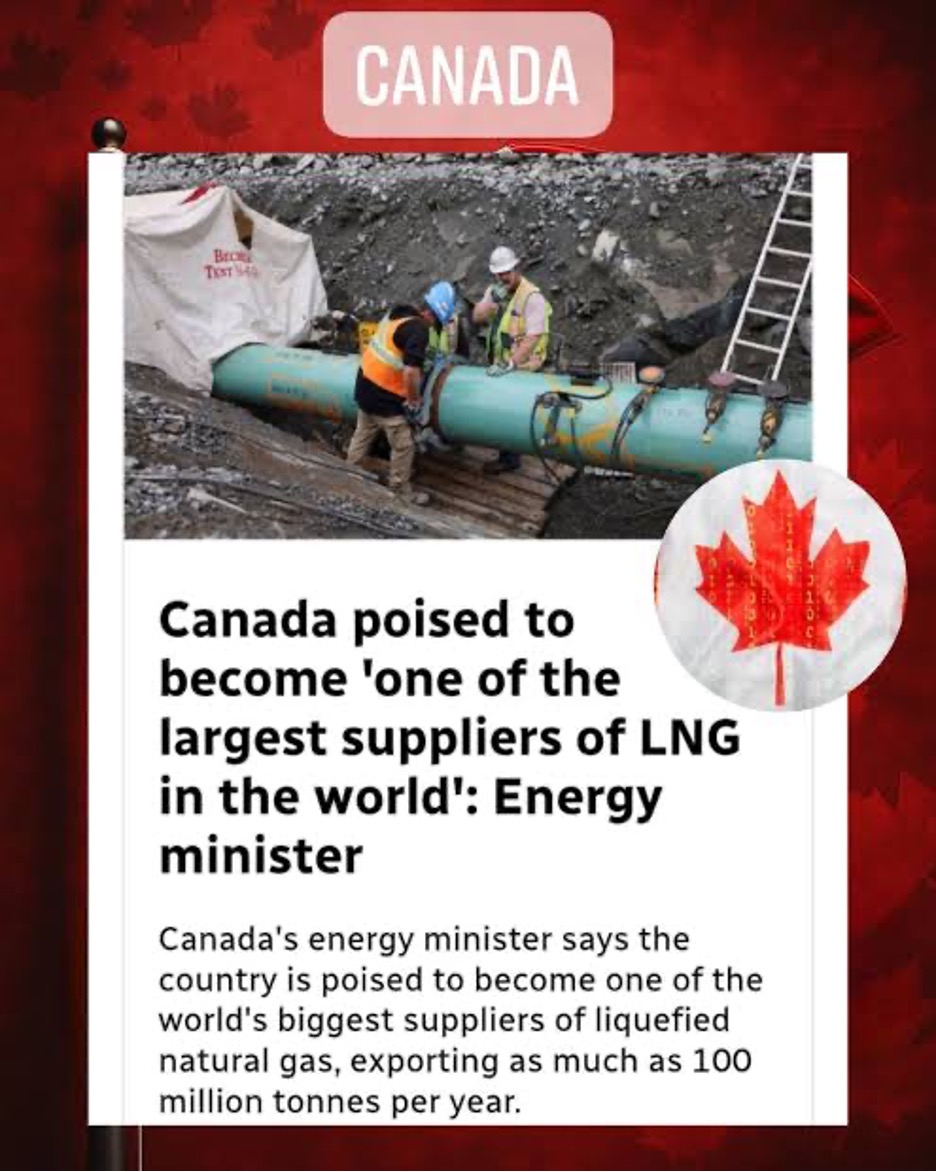
And Resource Works reported in February: “Then came a surprise double-down number from Energy and Natural Resources Minister Tim Hodgson, who declared that Canada could be one of the largest suppliers of LNG in the world —”as much as 100 million tonnes per annum.”
Hodgson told Parliament’s standing committee on natural resources that if Canada delivers on its LNG targets “as we hope, proponents will ultimately increase our production to as much as 100 million tonnes per annum.”
A new report from S&P Global says Canada’s cheap, abundant gas and access to two coasts make the 100-million-tonne goal achievable — at least in theory.
“Reaching the federal government’s ambition of 100 MMtpa of LNG export capacity could drive C$1 trillion in critical infrastructure investment, make Canada the third-largest LNG supplier, and cement its place as a geopolitical force in energy markets.”
But it casts doubt on Ottawa’s numbers, saying Canada is currently on pace for only 36 million tonnes by 2050.
Nelson Bennett of Resource Works writes: “Based on projects that have already received final investment decisions, Canada is currently on track to export 36 MMtpa of LNG by 2050, according to S&P. If Ksi Lisims LNG gets sanctioned, that would bring Canada to close to 50 MMtpa – half of Carney’s stated goal.
“Getting to 100 MMtpa would essentially mean taking every LNG plant proposed for B.C. and then doubling it – that or replicating it in Eastern and Western Canada.”
A challenging goal, but Bennett adds: “There are some encouraging signs that our eastern cousins are finally getting with the program.
“Shelved LNG projects in Eastern Canada are now being reconsidered, and the New Brunswick government will decide in the new year whether or not to lift a fracking ban that has prevented a substantial shale gas and tight oil resource from being developed.”
Carney has pointed to LNG as part of a new national effort to diversify Canada’s trade options and pacts with friendly nations in Asia and Europe, to reduce economic reliance on the U.S.
And B.C.’s new premier, Lorne Doerkson, says he aims to double LNG production by 2032 and at least triple it by 2035, to supply overseas countries.
But Nelson Bennett is not alone in noting that the S&P report also says this: “Seizing the opportunity requires Canada to move rapidly. Time is tight, with the current investment window closing in 18 months (next one opening post-2030). Canada lacks shovel-ready projects and faces high pipeline costs.
“Compared to Texas, Canada’s pipeline permitting takes 27 months longer and projects cost 160% more. . . . Policy instability complicates project planning, and power generation and transmission are key constraints.”
A quick look at production numbers:
- LNG Canada now can turn out 14 million tonnes a year and has started work on Phase 2 expansion, which could boost output to 28 million tonnes.
- Woodfibre LNG is under construction (now around 75% complete) is designed to produce some 1 million tonnes of LNG per year, starting in 2027, with potential expansion to reach up to 2.6 million tonnes per year.
- Haisla Nation’s Cedar LNG also is under It looks for a startup in late 2028 and would be able to produce some 3.75 million tonnes a day.
- Ksi Lisims LNG, with the Nisga’a Nation involved, says it would be able to crank out 12 million tonnes a year. The project has not yet made a final investment decision but has been talking of completion between 2028 and 2029.
Those plants thus would be able to produce just over 46 million tonnes a year.
Fortis BC’s Tilbury LNG operations are also being expanded but while that could result in some limited exports, Tilbury primarily serves domestic markets and LNG-fuelled ships.
On paper, at this stage, there is another handful of proposed projects in B.C. If all lights turn green on them, we could eventually be looking at production of a further 20.7 million tonnes a year. For example:
- Kanata Clean Power and Hanwha Ocean have signed a preliminary agreement to advance the proposed Kanata LNG project in the Prince Rupert region. If it goes ahead, it could produce up to 12 million tonnes a year starting in 2032.
- Northern Prince LNG has non-binding preliminary agreements covering up to six million tonnes a year. Its latest proposal is for LNG shipments by rail to a Manitoba export terminal on Hudson Bay. That terminal is proposed by NeeStaNan Projects Inc., a First Nation organization.
- And X LNG Canada Ltd. is proposing the Summit Lake PG LNG project in B.C. that would produce up to 2.7 million tonnes of LNG per year.
Elsewhere in Canada there are proposals for several LNG plants. Even if they all went ahead (which is highly unlikely) their estimates of output add up to 43 million tonnes, which would bring Canada’s LNG production for export to some 109 million tonnes.
That’s higher than Ottawa’s number, but with so much estimated production being only on paper, Ottawa’s announced goal of 100-million-tonne goal is a challenge indeed.
(Posted here 26 November 2026)
