
Our blog this week is by David Keane, LNG leader and consultant, former president of
Woodfibre LNG, and a special consultant to our Alliance.
Why trust — and workers — will decide BC’s energy future
By David Keane
British Columbia stands at an important moment in its energy history.
With LNG Canada now shipping cargoes from Kitimat, the province has re-entered the
global LNG market after years of delay and uncertainty. The opportunity is significant,
but so are the stakes.
Whether LNG succeeds in BC will depend not only on engineering excellence, capital
investment, or global prices. It will depend on something more fundamental: trust.
Therefore, the provincial and federal governments face a defining choice. LNG can be
treated as a finished chapter, or as a foundation for long-term economic strategy.
Major LNG developments are not simply export terminals; they are multi-billion-dollar
industrial platforms capable of generating sustained provincial revenues, strengthening
public finances, and supporting thousands of high-quality jobs across the province.
But none of that will materialize without durable partnerships.
Over more than four decades in the LNG sector – including serving as president of the
BC LNG Alliance and president of Woodfibre LNG – I have seen first-hand that social
performance determines whether projects move forward or stall.
Projects that invest early in meaningful engagement with Indigenous communities
succeed. Those that do not encounter delay, opposition, and uncertainty.
British Columbia has emerged as a global case study in what works. Equity-based
partnerships with First Nations have reshaped the development model.
Indigenous ownership stakes in projects such as Cedar LNG and Ksi Lisims LNG
represent not merely consultation, but participation.
These structures align economic interests, create long-term community benefits, and
significantly reduce project risk.
Trust shortens timelines. Trust attracts capital. Trust builds resilience.
Yet “Powering LNG Through People” extends beyond Indigenous partnership alone. It
also includes the skilled workforce that builds these projects and the communities that
sustain them.
Organized labour will play a central role in the next wave of LNG development. British
Columbia’s unionized trades – pipefitters, electricians, welders, heavy equipment
operators, marine workers – have demonstrated that they can deliver world-class
infrastructure under rigorous safety and environmental standards.
LNG Canada’s construction proved that complex, capital-intensive projects can be built
competitively in BC when labour, industry, and government are aligned.
Future LNG facilities represent one of the largest sources of private-sector capital
investment available to the province in the coming decade.
They offer opportunities to expand apprenticeship programs, strengthen Indigenous
workforce participation, and create durable middle-class employment in communities
throughout the province.
Approached strategically, LNG becomes not only an energy policy, but a workforce and
economic policy.The global context makes this moment consequential. Demand for natural gas
continues to grow, particularly in Asia, as countries seek to displace coal and secure
reliable supply.
Forecasts increasingly point to tighter LNG markets later this decade. Projects that are
ready, commercially and socially, will capture market share.
Those that hesitate may miss the window.
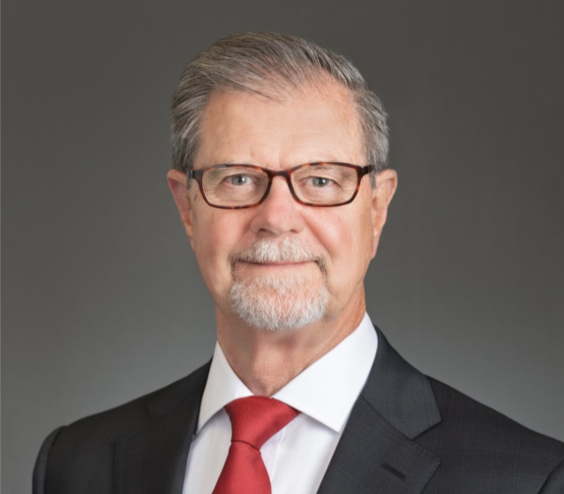
David Keane, Keane Strategic Consulting: https://bit.ly/4tXSXtn
(Posted here 13 May 2026)
