Canada has been called “an absolute natural-gas powerhouse.”
That from natural-resource advocate Canada Action, which adds that natural gas benefits Canadians in ways that include:
- Providing an affordable and reliable energy source for homes and businesses;
- Creating jobs nationwide, including more than 40,000 direct jobs in production, transmission, and distribution;
- Generating significant government revenues through taxes and royalties;
- Contributing to Canada’s export-based economy as gas is sold to the US and now, as LNG, to other nations;
- Supporting economic activity, with the natural gas distribution sector adding billions to Canada’s gross domestic product.
And, of course, we now are exporting liquefied natural gas (LNG) to some other countries.
Today, natural gas accounts for 41% of our country’s total energy supply, and it plays a critical role in our national economy.
But there’s a lot more to our Western Canadian natural gas than the piped natural gas that we use in industries, or to heat homes and cook foods.
The industrial sector is the largest consumer of such natural gas in Canada, using well over half of our output.
Natural gas also almost half of all residential homes in Canada, making it the most common home heating fuel ahead of electricity. And roughly two-thirds of Canadians rely on natural gas for daily uses such as heating and cooking.
Industrial consumption has been rising for some years now, as industries move off more carbon-intensive fuels. The cement industry, for example, has cut coal use by 85%.
Alberta, while our top gas producer, also eats up two-thirds of Canada’s industrial natural gas, primarily in oilsands operations that need heat and need steam to extract and upgrade their bitumen.
Ontario is the No. 2 industrial user, for various manufacturing and heavy industrial applications that cement manufacturing, and steel production. And British Columbia is No. 3, using natural gas for such things as making pulp and paper. That sector has reduced the use of heavy fuel by nearly 90% by switching to gas.
And across Canada natural gas heats nearly seven million homes and generates essential electricity.
Canada is the fifth-largest producer of natural gas in the world, and fourth in natural-gas exports. And at last count the US Energy Information Administration projects a 50% rise in global gas consumption through 2035, with growth in Brazil and China the major drivers.
And across Canada natural gas heats nearly seven million homes and generates vital electricity.
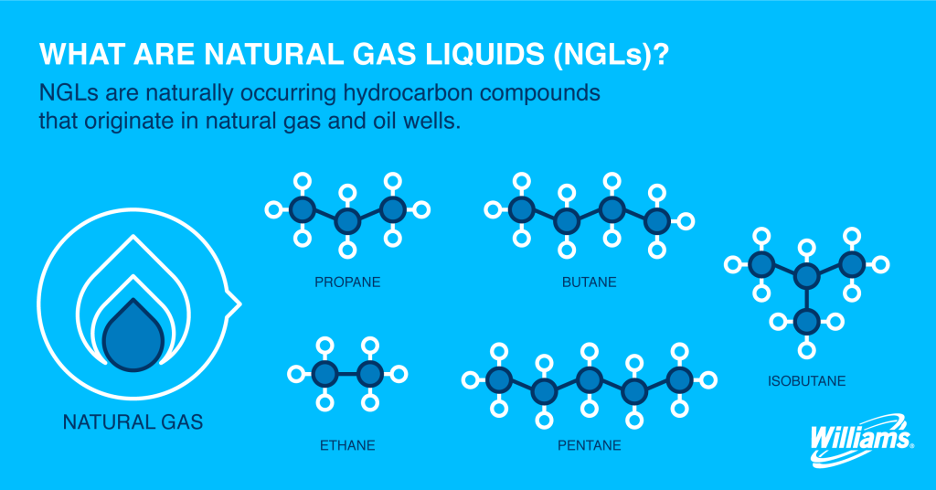
But, as we say, there’s a lot more to our gas than simply gas. That’s because along with it come valuable natural-gas liquids, and thus such products as:
- Ethane: Used to make ethylene, the base for plastics and packaging;
- Propane: Used for heating, cooking, and as a petrochemical feedstock;
- Butane: Used in portable stoves, lighters, and fuel mixes;
- Pentanes, pentanes-plus, and ‘Natural Gasoline’: Used as solvents and blending components for automobile and motor gasoline.
Before natural gas can be burned as a fuel or used in manufacturing processes, it is first processed to remove impurities such as water and sulphur. The water can be reused, and the sulphur used in the manufacture of many products.
At the same time, we obtain from raw gas that is rich in natural-gas liquids (NGLs) ethane, propane, butanes, pentanes, and other hydrocarbons such as pentanes-plus.
Products then derived from natural-gas liquids include plastics, agricultural fertilizers, synthetic fabrics (such as nylon, polyester, and acrylic), paints, adhesives, synthetic rubber, detergents, and anti-freeze. And a huge range of pharmaceutical and medical products.
Ethane: A major use of ethane is to make plastics, such as polyethylene or polythene, the most commonly produced plastic. It is primarily used for packaging: plastic bags, plastic film, plastic containers (such as soft-drink bottles, water bottles, cups and jars) plus plastic folders, toys and plastic pipes for a myriad uses.
Ethane is also in the manufacture of polyester clothing, antifreeze, and detergents.
Propane: Propane is used as a heating fuel in the residential, commercial, industrial, and institutional sectors. It is a common fuel for BBQ grills, for home heating, and for crop-drying in the agricultural sector. It also a feedstock for petrochemicals.
Propane has also become a major Canadian export to Asia, and Central and South America. Export terminals on the West Coast receive their propane by rail.
Butane: Butane is largely used by refineries for gasoline blending, and in the oil sands as a diluent to make heavy oil more liquid and “runny” to help the oil move better through pipelines.
Butane is also used to make polyurethane insulating foam, aerosol sprays and coatings, paint dyes and automotive spray waxes. And it is used as a blowing/propellant agent (think of those spray-cans of bug spray, cooking oil and whipped cream) and as a fuel or as a fuel additive and component in the manufacture of fuels.
And the related iso-butane is used as a refrigerant in home fridges, and blended into gasoline to lower vehicle emissions.
Pentanes: Pentanes are mainly used in the manufacture of plastic foams such as polystyrene for insulation in buildings and refrigerators, and in geothermal power systems. Pentanes are also used as high-octane fuel additives or components, and as solvents in many ordinary products, including some pesticides.
‘Natural gasoline’ (also known as pentanes-plus): While not used as a motor fuel itself, oil refineries use it in producing automobile gasoline. It is also used to make plastics, and, like butane, to dilute heavy oil for pipelines. And it is added to commercial ethyl alcohol to make it undrinkable.
As well, natural gas itself can be used to power turbines to generate electricity. This is of current interest in Canada as the country (and the world) is beginning to look for vast amounts of electricity to feed artificial intelligence data centres.
And natural gas can also be used to produce hydrogen, used in Canada for oil refining and fertilizer production.
And when burned for heat or to generate electricity, our natural gas emits fewer air pollutants, less carbon dioxide, and almost no particulate matter compared to other fossil fuels.
(Posted here 30 September 2026)
