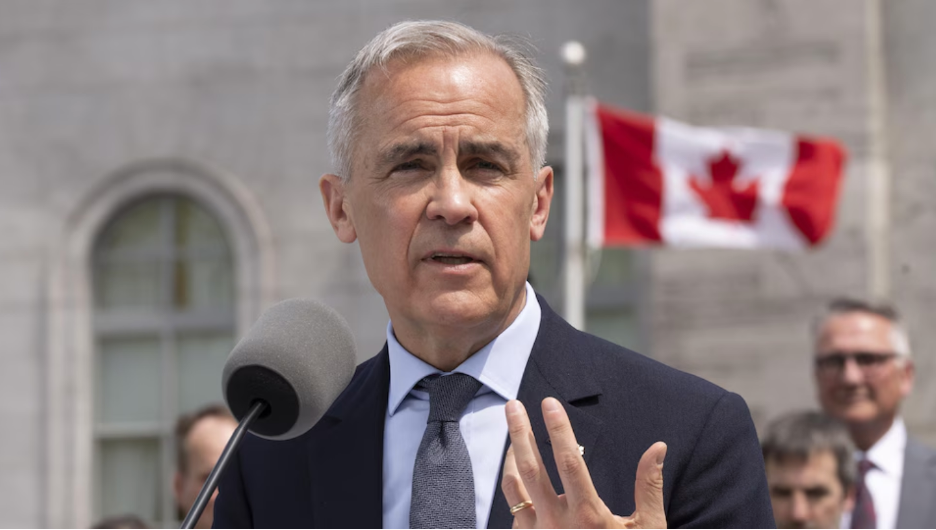
Prime Minister Mark Carney will start meeting Indigenous representatives on July 17 as he and his cabinet work to decide which major national resource projects get fast-tracked.
“I will be meeting with First Nations rights holders on July 17, here in Ottawa, Inuit leadership in late July, and Métis leadership soon thereafter,” Carney announced.
“I’ll attend these meetings alongside the responsible ministers, which will include working sessions and public roundtables.”
Calling the July 17 meeting a first step, Carney said Ottawa will meet Indigenous leaders in a spirit of “consultation, co-operation and engagement,” and with a focus on boosting Indigenous equity in major projects to share the potential wealth from development.
With his major projects bill now law, Carney says “the real work begins” to fast-track projects.
The Building Canada Act enables the federal cabinet to pick projects deemed to be in the national interest, approve them upfront, and override federal laws, environmental reviews and permitting processes.
Carney calls it essential to combat the economic threat posed by U.S. President Donald Trump to Canada’s steel, auto, and natural-resource sectors.
As examples of projects that could be included, based on recommendations from Canada’s premiers, Carney has mentioned ports, mines, energy corridors, power lines, renewable energy, oil and gas pipelines, and LNG.
His ministers will be meeting throughout the summer behind closed doors to implement the vision.
The law commits Ottawa to recognize, affirm and respect Indigenous Peoples’ constitutional rights when considering a project to fast-track, and to consult with Indigenous Peoples before a project is fast-tracked
Carney himself says consultation is “at the heart” of the new law. And: “Indigenous people have to come along for almost all of these projects for them to actually work.”
But while the law acknowledges a duty to consult Indigenous peoples if their rights “may be adversely affected,” it does not define how that consultation must or should occur.
Indigenous Services Minister Mandy Gull-Masty says there are “multiple points” where First Nations and other groups can bring forward their concerns.
Tim Hodgson, federal minister of energy and natural resources, said he hopes Indigenous groups will pursue large ownership stakes in new projects. “If we are serious about retooling our economy, then economic reconciliation must be front and centre.”
And Rebecca Alty, federal Crown-Indigenous relations minister, says Ottawa is looking to push resource projects “that have Indigenous support and even better would be Indigenous equity.”
The new law and Ottawa’s fast-track approach have met with mixed reviews from politicians, business leaders and environmental groups — and from Indigenous leaders.
National Chief Cindy Woodhouse of the Assembly of First Nations has said Ottawa risks trampling on Indigenous rights respecting lands, water, resources, inherent title, rights, jurisdiction, and treaties.
“First Nations are united. They want prosperity, but they don’t want it at the expense of our rights.”
The Assembly of First Nations plans a national forum before meeting with the prime minister.
Paul Prosper, a Mi’kmaw senator from Nova Scotia, led the charge against the legislation in the senate, quoting other First Nations leaders who called the law not reconciliation but a “betrayal of it.”
Brian Francis, a Mi’kmaw senator from P.E.I., said there’s no guarantee the promised economic benefits for fast-tracking projects will be fairly shared with Indigenous Peoples. He said it could ultimately delay projects because of the potential for Indigenous-led lawsuits.
And Abraham Benedict of the Chiefs of Ontario warned that if Indigenous rights are side-stepped on fast-tracking projects, there could be fast legal challenges.
“We will use the courts to slow down, to ensure that the rights holders are heard, that the government does what is right and has the First Nation rights holders at the table from the beginning.”
National Chief Woodhouse made it clear that not all Indigenous Peoples oppose resource development.
And one Inuit-owned project is hoping to be speedily deemed in the national interest and fast-tracked. That’s the Kivalliq Hydro-Fibre Link which proposes to connect Nunavut’s mainland communities to Manitoba’s power grid, via a 1,200-kilometre transmission line. It would power at least five Nunavut hamlets, and several gold mines, that now burn diesel for electricity and heat.
Meanwhile, Indigenous leaders in northwest British Columbia are urging governments to act swiftly to unlock more than $60 billion in clean-energy and infrastructure projects led or partnered by First Nations.
The feds have not yet disclosed which “Indigenous representatives” will be involved or consulted on and after July 17 in the fast-track process.
We call on Carney to ensure that he plays fair with Indigenous Peoples, fully consults with them on fast-tracking projects, and does not use a government hammer to approve projects without free, prior, and informed Indigenous consent.
- About the Building Canada Act and associated legislation: https://ow.ly/7Nzv50Wlmxl
Posted here 09 July 2025
